Showing posts with label disaster. Show all posts

Monday, February 27, 2017

Here’ s Why We Need To Say NO To Plastic


Plastic is a material consisting of any of a wide range of synthetic or semi-synthetic organics that are malleable and can be molded into solid objects of diverse shapes. Plastics are typically organic polymers of high molecular mass, but they often contain other substances. They are usually synthetic, most commonly derived from petrochemicals, but many are partially natural. Plasticity is the general property of all materials that are able to irreversibly deform without breaking, but this occurs to such a degree with this class of moldable polymers that their name is an emphasis on this ability.

The success and dominance of plastics starting in the early 20th century led to environmental concerns regarding its slow decomposition rate after being discarded as trash due to its composition of very large molecules. Toward the end of the century, one approach to this problem was met with wide efforts toward recycling. Some polymers may also decompose into the monomers or other toxic substances when heated. Most plastics are durable and degrade very slowly; the very chemical bonds that make them so durable tend to make them resistant to most natural processes of degradation. However, microbial species and communities capable of degrading plastics are discovered from time to time, and some show promise as being useful for bioremediation certain classes of plastic waste.

The greatest challenge to the recycling of plastics is the difficulty of automating the sorting of plastic wastes, making it labor-intensive. Typically, workers sort the plastic by looking at the resin identification code, although common containers like soda bottles can be sorted from memory. Typically, the caps for PETE bottles are made from a different kind of plastic which is not recyclable, which presents additional problems to the automated sorting process. Other recyclable materials such as metals are easier to process mechanically. However, new processes of mechanical sorting are being developed to increase capacity and efficiency of plastic recycling.

Many people have concerns on plastic shopping bags.  The traditional reason is that littered bags are unsightly and can create a hazard to animal life. Littering is often a problem no matter where you live in the world. In India’s largest state a new environmental issue recently surfaced which has resulted in a complete ban on the use of plastic bags. From the beginning of August 2010, the manufacture, storage, import, sale and transport of plastic carry bags will be illegal in Rajasthan.  No shopkeeper, retailer, trader, hawker or vendor will be allowed to supply goods to consumers in bags. The measure was proposed after local municipalities had complained of blocked sewer lines, drainage systems and water distribution pipelines due to plastics buried in the soil, providing breeding grounds for malaria and dengue fever. In Mumbai in 2005, India experienced massive monsoon flooding partially as a result of drains blocked by plastic bags, resulting in over 1,000 deaths. In talking to people – from shopkeepers to executives – it becomes clear that the issue of plastic pollution is one they are aware of and they understand why it is a serious issue.  This awareness and willingness to act to decrease plastic use and waste is slowly permeating in daily Indian life.

By: 
Mohit Hooda  
Student, INLEAD


Tuesday, April 26, 2016

A guide to Disaster management

Disasters can strike anywhere and at any time. The recent Japan quakes and the droughts in India are testimonials to this fact. Now, though we have a little control over the timing and occurrence of the disasters, all we can do is curtail the disaster’s impact and Disaster Management is aimed at achieving just that.

DISASTER MANAGEMENT explains how to overcome and get cured from disasters like floods, droughts, cyclones, earthquakes, tsunami, landslides, bomb blast, fire, accidents, poisonous and chemical disasters.


The term disaster owes its origin to the French word “Disaster” which is a combination of two words ‘des’ meaning bad and ‘aster’ meaning star. Thus the term refers to ‘Bad or Evil star’. A disaster can be defined as “A serious disruption in the functioning of the community or a society causing economic, social and environmental losses which are uncontrollable for long period of time.

The basic supplies needed in a disaster kit are: -

Water: You should have a three-day supply of water on hand, or about one gallon per day per person. If your water is not already treated with chlorine, add some household bleach to the bottles. It should be stored in a cool, dark place for no longer than six months.

Food: Put aside at least three-days worth of food in your disaster kit that is non-perishable and don't need refrigeration. Also, choose foods that don't need heating. Avoid foods with a high salt content as they will make you thirsty.

Foods that are recommended are: Candy, chocolate, tea, coffee Sugar, salt, pepper, Canned juice, milk, soup Canned fruits, meat, vegetables Peanut butter, jelly.

Assemble a first aid kit: for your home and one for each car. A first aid kit should include 24 Sterile adhesive bandages in assorted sizes, 2-inch sterile gauze pads (4-6), 4-inch sterile gauze pads (4-6), Hypoallergenic adhesive tape, Triangular bandages (3), 2-inch sterile roller bandages (3 rolls), 3-inch sterile roller bandages (3 rolls), Scissors, Tweezers, Needle, Antiseptic’s, Thermometer, Tongue blades (2), Tube of petroleum jelly or other lubricant, Assorted sizes of safety pins, Cleansing agent/soap, Latex gloves (2 pair), Sunscreen, Non-prescription drugs pain killer, Antacid (for stomach upset).

One should make sure that the disaster kit contains clothes that provide protection from cold and from heat. There should be at least one change of clothing per person, including footwear.

Tools: Mess kits, battery-operated radio or television and extra batteries Flashlight and extra batteries, Cash or traveller’s checks, Knife, Match box’s, Thread, Whistle, Plastic sheeting Map of the area (for locating shelters), , Paper, pencil Needles,

Special items: include family documents such as birth certificates, passports, photo id, bank account numbers, credit card numbers, household inventory, cash and important things.

Types of disasters: primarily there are two types-

1.      MAN-MADE- Man-Made disaster are specific events where a man made hazard has come to fruition.
Example-Fire, Terrorism, Nuclear, Stampede, road accidents etc

Taking an example of fire,
Fire safety refers to precautions that are taken to prevent the likelihood of a fire that may result in death, injury, or property damage. Three elements of fire are fuel, any combustible material-solid, liquid or gas, oxygen and heat.
To overcome fire we can use fire extinguisher, always remember P.A.S.S
P- Pull the pin
A- Aim the nozzle
S- Squeeze the trigger
S- Sweep it to side to side

Steps to evacuate a building on fire:
The last person in the room should not lock the door.
Always proceed to SAA- Safety Assembly Area
Always use staircase to exit the building.
In case of LPG, remember to walk briskly do not crawl.
Call the ambulance, fire brigade and police.

2.      NATURAL

When a natural disaster occurs, we can't always rely on police or governments to provide help.
Earthquake is a sudden shake of the earth, which lasts for a short time, within a very limited region. Most earthquakes last for less than a minute, but sometimes shock may last, for as long as 3 to 4 minutes. The place where an earthquake originates inside the earth is called the focus of the earthquake. Most human lives in earthquakes are lost due to collapse of buildings.

If you are caught indoors at the time of an earthquake, stay away from glass windows, doors, almirahs, mirrors, falling plaster, bricks or stones. Get under a table or a sturdy cot so that you are not hurt by falling objects. Do not rush towards the doors or staircase. They may be broken or jammed.

If you are outdoors at the time of earthquake, If open space is available nearby, go there. Keep away from tall chimneys, buildings, balconies and other projections, Do not run through streets, hoardings or lamps may fall on you.

A flood is an overflow of an expanse of water that submerges land. Flood is defined as a covering by water of land which is not normally covered by water. In the sense of "flowing water", the word may also be applied to the inflow of the tide. Flooding may result from the volume of water within a body of water, such as a river or lake, which overflows or breaks levees, with the result that some of the water escapes its usual boundaries. While the size of a lake or other body of water will vary with seasonal changes in precipitation and snow melt, it is not a significant flood unless such escapes of water endanger land areas used by man like a village, city or other inhabited area.

One needs to be prepared at all times for any kind of disaster. As of April 2016 there have already been 9 earthquakes around the globe and 2 Tsunami warnings. I do hope that people who read this article on Disater preparedness are able to implement some bit and live a safer life.     
           
- Mr. Vivekvardhan Gade
  Student, INLEAD
  July 2015, INBM        

Friday, April 1, 2016

An Act of God or Man Made Corruption?

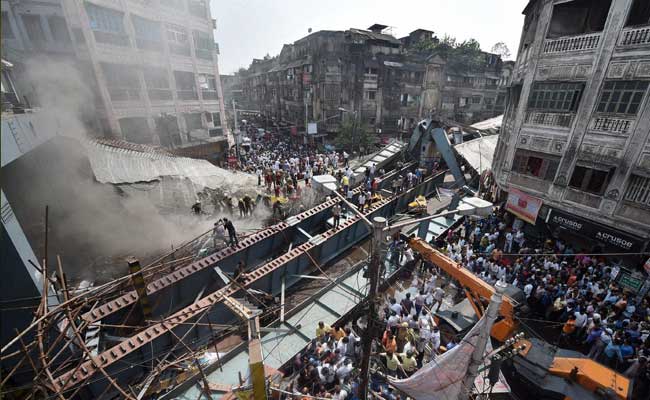
“India Kolkata Flyover Collapse: Hope fading for survivors”- BBC News

“21 dead as Kolkata flyover collapses”- The Hindu

In 2008, the CPI(M) Govt. in West Bengal commissioned a flyover in one of its most congested areas, Girish Park. The 2km flyover passing over Vivekanand Road was supposed to be ready by 2011 but eventually missed 3 deadlines and at the time of collapse was still under construction. With state elections just days away, this disaster has become a political issue. Mamata Banerjee, the current Chief Minister of WB from the TMC (Trinamool Congress) Party has passed the buck for the unfortunate mishap to the previous govt. The Hyderabad- based firm, IVRCL (Iragavarapu Venkata Reddy Construction Limited) responsible for the construction of this flyover has been booked for culpable homicide by the West Bengal Police Department.

While the disaster is of gargantuan proportion, unfortunately the construction company has shown little respect for the lives lost due to the flyover collapse. K Panduranga Rao, Group Head (HR and Admin), IVRCL told reporters that “It’s nothing but a God’s act. So far in 27 years we have constructed several number of bridges…it (collapse) has never happened”. This, especially when concerns were raised on quality and safety issue of the flyover.  There were hundreds trapped under the huge iron and steel girders and the debris until the morning of 1st of April, 2016. Two IVRCL engineers are also feared trapped under the mountain of debris, along with 5 others who are injured.

The Rescue Efforts

Army men along with Kolkata Police Disaster management team, NDRF (National Disaster Response Force) and fire fighters have been working round the clock to pull out victims. 24 have been confirmed dead, and from the 90 rescued many are in critical condition. People from the Burra Bazaar area, around the flyover, in an apparent display of humanity, have been serving tea and snacks to rescuers and the rescued. The ones being successfully pulled from under the debris have been rushed to nearby hospitals.

Reasons behind such tragedies

IVRCL, the company, responsible for construction of the flyover, a portion of which collapsed on the 31st of March, has yet to ascertain the cause of collapse. According to them standard operating procedure has been followed, where 78% of the work was completed without accident. They claim that the flyover was designed by a reputed consultant from Kolkata and all clearances and steps to ensure quality had been taken. The work was commissioned for Rs. 166 crores and was missing deadlines due to lack of clearances as the Burra Bazaar area is extremely crowded. However, the fact remains that a concrete structure will collapse if the deadweight calculation is faulty and therefore there are cracks due to design flaws. There is also the accusation of usage of substandard material, inadequate quality inspections; and this is a problem across many construction projects in India.

There have been similar disasters across the world like the one in 1958 in Canada, Vancouver, where the cause was diagnosed to be miscalculation of weight bearing capacity. In Melbourne, Australia in 1962, a bridge collapsed due to fractures in the pillars due to extreme cold weather conditions. Then again in Belgium in 1966, a bridge had collapsed due to faulty design, where the foundation of the piers was not deep enough.

While forensic team is doing its investigation, the Vivekanand Flyover collapse seems to be a combination of the all the reasons mentioned above, in addition to poor quality construction material. The guilty need to be booked and efforts should be made to prevent future disasters which are man-made and could have been easily prevented for want of honesty, ethics and intelligence.

- Ms. Monica Mor

  Senior Faculty, INLEAD

Text Widget 2