Showing posts with label Indian Prime Minister. Show all posts

Monday, March 14, 2016

Are we smart enough to build Smart Cities?

The current Govt. true to its pre poll promises has taken up some initiatives that will in the long run be those initiatives which Indians would be proud owners of.  One such initiative is construction of Smart Cities. A project if successful, will serve as a model modern living concept.

What is a Smart City?
There are many definitions of Smart cities. While we will tackle that later, let’s look at some initiatives that the Govt of India has taken up in its Smart cities Mission. The mission is expected to set examples that can be replicated both within & outside the smart city.


According to the website http://smartcities.gov.in/ the core infrastructure elements in a smart city would include:
i. Adequate water supply;
ii. Assured electricity supply;
iii. Sanitation, including solid waste management;
iv. Efficient urban mobility & public transport;
v. Affordable housing, especially for the poor;
vi. Robust IT connectivity & digitalization;
vii. Good governance, especially e-Governance & citizen participation;
viii. Sustainable environment;
ix. Safety & security of citizens, particularly women, children & elderly; and
x. Health & education

Smart cities are aimed at improving the quality of life, provide employment opportunities, encourage  green living and especially create inclusive cities that look after its Have nots (i.e. poor, elderly, disadvantaged) and the Haves alike.

Choosing Smart Cities in India
There are 100 Smart cities in the pipeline that have been distributed among States & Union territories on the basis of equitable criteria. The formula gives equal weightage (50:50) to urban population of the State/UT and the number of statutory towns in the State/UT. This has resulted in all States & UTs having atleast 1 smart city, with Uttar Pradesh having a maximum of 13, followed by Tamil Nadu with 12, and Maharashtra with 10 such cities.

Monitoring of Smart Cities
The Union Ministry for Urban Development is responsible for implementing this mission. A total of Rs.70.16 billion has been allocated for this mission. National level monitoring will be of two types: Apex Committee & National Mission Directorate. These committees will develop strategic blueprints, coordinate across center & states, oversee capacity building, and approve the release of funds based on progress in implementation. The first smart city under construction is at the Gujarat International Finance Tec-City at Gandhinagar in Gujarat.

To conclude lets define Smart City:
To provide for the aspirations and needs of the citizens, urban planners ideally aim at developing the entire urban eco-system, which is represented by the four pillars of comprehensive development-institutional, physical, social and economic infrastructure. With these smart cities we will be able to boast of modern facilities & a quality of life comparable to western standard of living. It will be symbolic of a culture that needs to be fostered & inculcated such that a sense of discipline & timeliness becomes an integral part of our lifestyle.

Monica Mor
Sr. Faculty, INLEAD

Monday, March 7, 2016

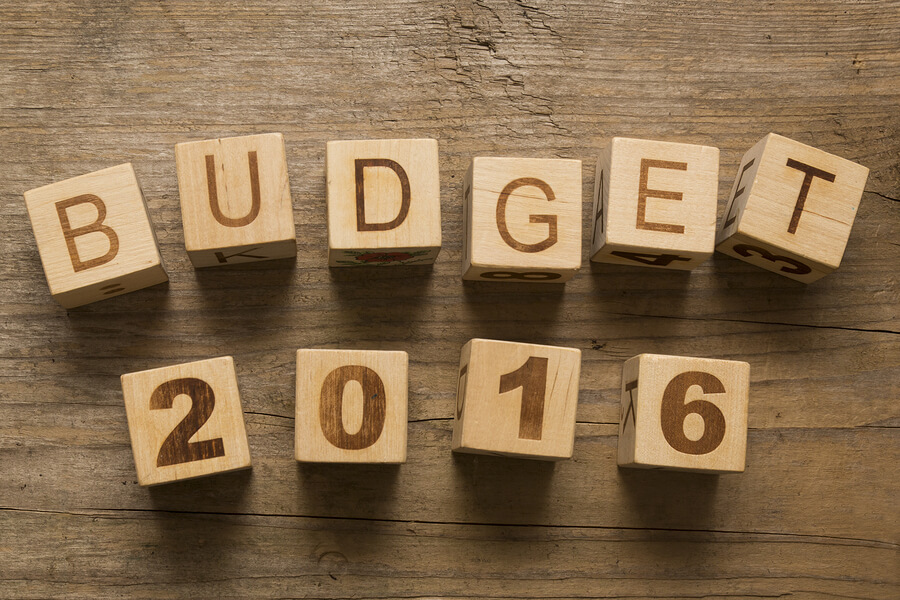
The Budget Gravy Train of 2016

A budget that was met with tons of cynicism resulted in a plunge in stock prices of some companies & the shedding of close to 200 points in the Sensex on the 29th of Feb soon after the presentation by Mr. Arun Jaitley, Minister of Finance.  A day after however, the Sensex surged ahead as a result of confidence shown by business houses in the pro farmer budget. The flop show curtailed primarily by our Minister of State for Finance, Jayant Sinha, who called the budget a “Vikas ka Budget”.


In a nutshell, it’s a budget that angers the salaried class, pacifies the startups, cajoles the farmer & nurtures the poor. So here’s presenting a quick run through on what’s in this budget for citizens of the Republic of India:

For the Farmers:
The Finance Minister has rolled out several sops for the farm sector with a focus on doubling farmers’ income in 5 years. An ambitious plan by all means, which clearly asks the nation to bring BJP back in power in the general elections of 2019. And with the upcoming state elections in UP & West Bengal which are typically agriculture driven, the Govt. aims to come to power there. In fact our service tax has risen to 15% (wef June 1), up by 0.5% (a new Krishi Kalyan Cess), clearly pointing to the importance of generating funds for the farming community. A dedicated long term Irrigation Fund with an initial corpus of Rs. 20,000 crore in NABARD has been created. In totality, the target for Agricultural credit in 2016-17 is 9 lakh crore.

Sops for the poor:
Jayant Sinha said that “Garibon ki Unnati”, or upliftment of the poor, would be government’s foremost priority. A unified social security programme which would be linked to Aadhar will identify & target the poor to provide them with food, shelter, sufficient income support, health cover, life insurance, pension & access to various credit facilities.  The Govt. has allocated Rs. 38,500 crore for the Mahatma Gandhi National Rural Employment Guarantee Act (MNREGA) this year. In addition, there will be a massive nationwide roll-out of ATMs & micro-ATMs in Post offices to ensure credit availability at all accessible points in the rural areas.

For the startups:
Not a very exciting sector, in terms of budgetary provisions this year. Rs. 500 crore has been allocated for Dalit & women entrepreneurs. There will be 100% profit deductions in 3 out of first 5 years for companies set up between April 1 2016 & March 2019.

For the salaried class:
This class is often the most stretched & penalized every year, ironically for paying their taxes! They would hereafter have to pay more for fine dining, movies, a visit to the gym or beauty salon, telecom services, electricity & mobile bills, amongst many other services which have been adversely affected by the hike in service tax. To top it all, their Provident Fund savings are also going to be taxed. It would be on the amount of the interest earned on the PF withdrawn if it’s greater than 60% of the total amount held.

The Digital twist:
Some positives, some negatives; multiple opinions are being posted on this year’s budget.  The budget, I must concede has one big positive, and that’s the huge Digital India flavor. It’s extremely tech-heavy other than being farmer-heavy. The finance minister has proposed establishing a land information management system, a financial data management center, an online agricultural marketing platform, a digital food grain procurement system, a website connecting dairy animal breeders & farmers, automation in 3 lakh fair price shops and a data-mining platform to nab tax evaders.

Well the train has moved from the Fiscal platform, let’s see where its stops, where it rolls back, where it derails & where it catches speed. Keep watching this space for more inputs & for any modifications that may happen as time goes by.

- Ms. Monica Mor
  Sr. Faculty, INLEAD


Thursday, July 30, 2015

Top 5 Management Lessons to learn from Narendra Modi

Source-www.archive.financialexpress.com
Crisp personality, clear vision, exceptional orator and enthusiastic nature, this is Narendra Modi, the 14th Prime Minister of the largest democracy on this planet, India, best described for you. And, 26th May, 2014 was the historic day that this charismatic leader took oath as the first Indian Prime Minister born after Independence, in a first of a kind oath taking ceremony attended by who’s who of Politics, Bollywood, Sports and the Indian Corporate Industry.

Winning a total of 282 seats, the Bharatiya Janata Party (BJP) and Narendra Modi proved that their win wasn’t just a fluke or anti-incumbency vote against the Congress.  So, what changed for BJP from the 2009 general elections to the one held in 2014? The answer is, Narendra Modi.

Here are the top 5 management lessons that one can learn from the “ultimate manager” as he is jokingly called by his opposition.  

1) Clarity of thoughts- This is the first and the foremost quality that a manager should possess. Until and unless you’re clear about why you’re in the race, you can’t win it. This is where Narendra Modi scored against his contemporaries.  From the very beginning, NaMo was very clear that his aim was to fix his place at 7, Race Course Road and this is what he confidently projected to others. Seeing his confidence in himself, gave the public the confidence that NaMo has it what it takes to run a country like India and they gave him a whole hearted mandate.

Source- www.deccanchronicle.com
2) Set smaller targets in order to achieve that big target- Mr. Modi’s journey to the top job was an amalgamation of small strategic steps taken one at a time. He very carefully set small, small targets for himself and achieved them at his own self-defined pace.  He started with Gujarat and then slowly, slowly penetrated to the heart of the nation (remember the famous 2013 SRCC speech?).  Hence, in order to achieve that one big target in mind, you need to first set several smaller targets and achieve them one by one.


3) Find the right team- "A single arrow is easily broken, but not ten in a bundle."  Mr. Modi understood this well. He knew that in order to reach the top, he will have to make his foundation strong.  Starting from Amit Shah to BS Yeddyurappa, he made sure that the people whom he trusted and believed in were in and the people (Sanjay Joshi, Jaswant Singh) whom he didn’t were out.

4) Be the Change you want to see- With initiatives like Make in India, Swacch Bharat and Jan Dhan Yojana etc., Mr. Modi proved that he isn’t just words.  Being the Prime Minister of the country didn’t stop him from picking up a broom in his hands and cleaning the sides of a littered street. He showed the public and his contemporaries how it is done and also how cleaning your own country is not a matter of shame. One needs to give him credit for turning a thing like cleaning streets with a broom in your hand into a thing of social status. Another marvelous use of social media by the Social Media genius.
Source-www.economictimes.indiatimes.com


5) Know your weaknesses and never play to them – No human being is perfect and the person who understands this thing is the closest one can come to being perfect. Taking lesson from his 2013 India Today Conclave debacle where he lost his cool for a few seconds following questions regarding the 2002 Godhra Rights, Mr. Modi has made sure that he never repeats his this mistake ever gain. He knew that media being an essential tool to connect with the public, he can’t afford to neglect this medium completely. So, he turned to rallies, social media and conceptualized Mann ki Baat (a monthly All India Radio broadcast) to overcome his this weakness.  

Text Widget 2