Showing posts with label crisis management. Show all posts

Monday, January 25, 2016

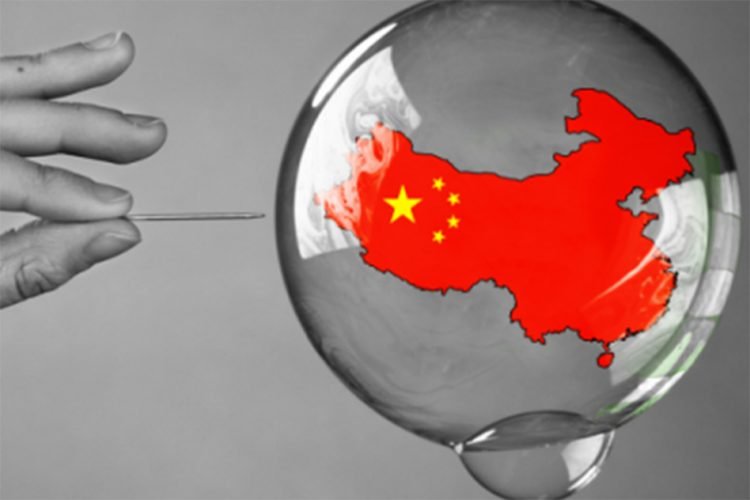
China Rout (Revisited) 2.0


Almost all headlines across all Financial papers, economy-related discussions, whether online or offline start with ‘China’. It’s like the world’s sneezing just because China has caught a cold. A very, very bad cold at that!

In my earlier blog published in late August 2015, titled “Is the Chinese Dragonlosing fire?”, I had traced China’s growth path over the past 4 decades and the bottlenecks thereafter it faced that eventually stalled its growth. The fallout then wasn’t as severe for the Rest of the World as it is now. Yes, there were losses to the tune of billions of dollars due to Shenzhen and Shanghai stock market crashes, but prospects then didn’t seem as bleak as now in 2016.

So, what’s wrong with China?

The world’s most populous country has a growth rate even now that’s still faster at 6.5% than USA’s 2.5%. The Chinese numbers, the world feels, is significantly inflated and either the top leaders are incredibly good at meeting the targets or the analysts in China are too scared to reveal the truth. The Shanghai composite indexes plummeted 15% at the start of 2016 and since then stock markets world over seem to be under a Bear grip.

China's industrial production slowed last year. Yet borrowing jumped a further 5 per cent as banks pumped more and more money into less and less economic factories, housing schemes and loss-making businesses. The message that the government sent was investment in real estate is fine even if the world does not have the appetite for its manufactures, according to Sydney Morning  Herald. China aimed to keep inflating its GDP even if the houses they built went unoccupied. Unfortunately there’s more capital outflow from China than inflow. Investors are not as keen on China, and local Chinese are stashing their money abroad. China’s president, Li Xinping’s authoritarian attitude isn’t helping either.

Solution to this persisting conundrum:

There’s a possibility, according to Bloomberg Asia that reserve requirements of Chinese banks may be cut which will increase liquidity of banks who can therefore lend more. The question however remains, are there companies who have the appetite and the need to borrow more? Inept communist policies have to be redrafted, private debt within the economy needs to be reduced, and more importantly market needs to have a free hand to work the Yuan

The world went into turmoil with the US subprime crisis in 2008, followed by Eurozone meltdown. Now the Chinese seem to be riling the world with its worst economic performance in 2 and half decades. All major stock markets will get shaken since the correlation between their performances is quite high. Well, let’s sit this one out and wait for reassuring financial news sooner rather than later.

               
-         -Ms. Monica Mor
Sr. Faculty, INLEAD


Tuesday, September 1, 2015

Crisis Management during an Event

Arranging an event is like being on a constant battle. You have no idea what new challenge or problem would be thrown in front of you and from where. That’s why, just like a prepared soldier, an event manager has to be well prepared at all the times and have a back-up of things which he/she considers can go wrong during the course of the event.

An event manager is the captain of the ship called “Event”.  He/she has to make sure that the people on board have a fabulous evening/morning as promised according to the schedule.

Here, we present to you an easy crisis management plan that all the event managers out there can follow in order to make sure that they’re never stuck in such a crisis situation.

 1)  Clarity on Chain of Communication- “Too many cooks spoil the dish.” Just like the saying, having too many people speaking on behalf of the event organizer can lead to a lot of speculation and confusion. It’s always better to appoint a media spokesperson in order to insure that streamlined information is communicated to the audience and the press.


 2)   Timely Responses- Sometimes silence speaks louder than words. In case of a crisis, this silence can have a huge impact on the reputation of your company. So, make sure, that you timely respond to all the messages, queries or media questions that come your way. Keeping the audience in oblivion is not a smart move. Social Media can become a great communication tool during the times of crisis.

 3)  Keep the Media informed- In case you had already called journalists, photojournalists and
photographers to cover the event, keep them updated about the status of the event. Keeping them in dark about the developments can have a huge negative impact on the event.


 4) Keep your Events Insured- Better be prepared than sorry. Cancellation of an event can cause huge monetary losses to the event organizer and manager. In order to insure that you don’t end up with a negative bank balance after an event blunder, make sure you get your events insured in advance. Though their premiums are high, but, they really come in handy at the time of crisis.

 5)  Plan well- Anything can happen at any time, even towards the end of a particular event. So, till the event is over, keep your ears and eyes open. In order to make sure that nothing goes wrong, plan your event in a systematic manner and have a back-up plan ready.

Further, what has happened, has happened and “The secret of crisis management is not good vs. bad, it’s preventing the bad from getting worse.” 

Images Courtesy- Google Images 

Text Widget 2