Showing posts with label China. Show all posts

Monday, January 25, 2016

China Rout (Revisited) 2.0


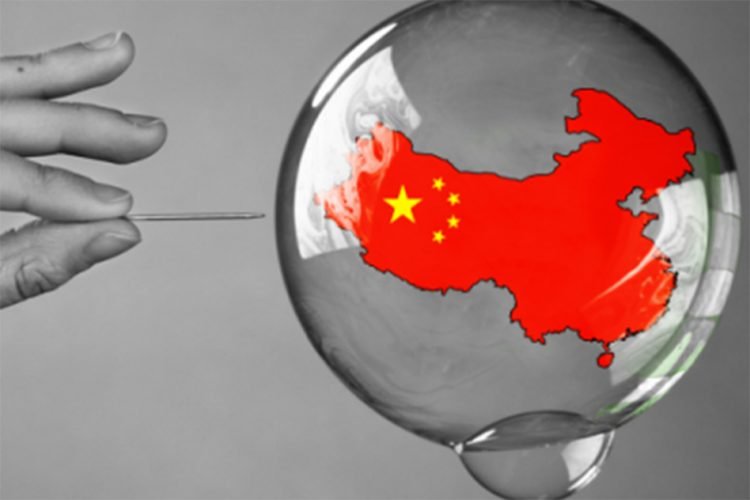
Almost all headlines across all Financial papers, economy-related discussions, whether online or offline start with ‘China’. It’s like the world’s sneezing just because China has caught a cold. A very, very bad cold at that!

In my earlier blog published in late August 2015, titled “Is the Chinese Dragonlosing fire?”, I had traced China’s growth path over the past 4 decades and the bottlenecks thereafter it faced that eventually stalled its growth. The fallout then wasn’t as severe for the Rest of the World as it is now. Yes, there were losses to the tune of billions of dollars due to Shenzhen and Shanghai stock market crashes, but prospects then didn’t seem as bleak as now in 2016.

So, what’s wrong with China?

The world’s most populous country has a growth rate even now that’s still faster at 6.5% than USA’s 2.5%. The Chinese numbers, the world feels, is significantly inflated and either the top leaders are incredibly good at meeting the targets or the analysts in China are too scared to reveal the truth. The Shanghai composite indexes plummeted 15% at the start of 2016 and since then stock markets world over seem to be under a Bear grip.

China's industrial production slowed last year. Yet borrowing jumped a further 5 per cent as banks pumped more and more money into less and less economic factories, housing schemes and loss-making businesses. The message that the government sent was investment in real estate is fine even if the world does not have the appetite for its manufactures, according to Sydney Morning  Herald. China aimed to keep inflating its GDP even if the houses they built went unoccupied. Unfortunately there’s more capital outflow from China than inflow. Investors are not as keen on China, and local Chinese are stashing their money abroad. China’s president, Li Xinping’s authoritarian attitude isn’t helping either.

Solution to this persisting conundrum:

There’s a possibility, according to Bloomberg Asia that reserve requirements of Chinese banks may be cut which will increase liquidity of banks who can therefore lend more. The question however remains, are there companies who have the appetite and the need to borrow more? Inept communist policies have to be redrafted, private debt within the economy needs to be reduced, and more importantly market needs to have a free hand to work the Yuan

The world went into turmoil with the US subprime crisis in 2008, followed by Eurozone meltdown. Now the Chinese seem to be riling the world with its worst economic performance in 2 and half decades. All major stock markets will get shaken since the correlation between their performances is quite high. Well, let’s sit this one out and wait for reassuring financial news sooner rather than later.

               
-         -Ms. Monica Mor
Sr. Faculty, INLEAD


Friday, August 28, 2015

Is the Chinese Dragon losing fire?

The great Chinese Dragon tumble on Monday led to a furore in almost all the leading markets of the world with all of them ending in deep red. The Shanghai Composite Index ended trade on Monday down 8.49 percent, after all of the yearly gains were wiped out of the market. Let’s start decoding what led to this Monday Mayhem.   

A quick background…

In 35 years from 1979 to 2014, the Chinese economy has grown by 10% per annum and doubled in size every 8 years, relative to the US economy. The subsequent governments in China worked on “decollectivization” of individual farm lands which helped improve agrarian productivity to help feed a burgeoning city population. Then they set up innumerable micro and small enterprises in the manufacturing sector and opened new industrial zones in Pearl River Delta in South China (adjacent to Hong Kong and Macao) and in the Fujian Province (close to Taiwan).

The Economic Boom

Gradually, foreign investments surged into China primarily due to availability of cheap labour, and also due to the succession of Hong Kong into Chinese mainland in 1997 and China’s subsequent entry into the WTO also added to the cause. Chinese Government ensured competitiveness of Chinese goods by repeated devaluation of its currency from 1.5 Yuan to 1 US$ in 1978, to 4.8 Yuan to 1 US$ in 1990, to 8.3 Yuan in 1994, to 10 Yuan very recently. One example of a successful manufacturing enterprise from China is Foxconn, manufacturer of iPhone, which is now setting up its manufacturing units in India.

The Problem starts                                                                   

With a devalued currency and manufacturing glut, exports surged to unprecedented levels. Over time, while manufacturing continued to power ahead, unfortunately, the global demand and consumption of Chinese manufactures hit a new low. China started experiencing a crisis of over accumulation; i.e production far outstretches consumption both in the international and in the domestic markets, especially in cement, steel, aluminum and shipbuilding.

The situation deteriorates

The Chinese economy in 2007 found itself to be uncoordinated, unbalanced and unsustainable. In 2009, thousands of companies shut shop leaving 20 million workers unemployed. By the time it was 2013, there were ample Government stimulus programs in place and shadow-banking networks active. (It has been common practice for investment banks to conduct many of their transactions in ways that do not show up on their conventional balance sheet accounting and so are not visible to regulators or unsophisticated investors.) Growth rates were upped, but it left a toxic legacy. There was indebtedness all around, insufficient consumption of manufactures, and to top it all the property bubble deflated in 2014. Central Government then encouraged investors to flood the stock market with money, and by June 2015, the Stock Exchange had soared by 150%. But, since this was in complete dissonance with the real economic situation, and with huge numbers doing margin trading, it didn’t take long for the stock market to crash, which it did on the 12th of June, 2015 and there was rout of 4 trillion $ of value from Chinese stocks. These developments in China will surely have had repercussions all over the world and for a long time to come!


And, eventually on 24 August, the worst fears of most of the world economists were realized when the Shanghai market tanked and took all the major markets with it. 

-Ms. Monica Mor
 Senior Faculty, INLEAD

Courtesy- Google Images 

Text Widget 2