Wednesday, August 27, 2014

INBM Students Visit DLF Emporio, India's Finest Luxury Destination on 25th August'14

On the 25th of August, 14 students pursuing International Business Management from INLEAD got  an opportunity to visit DLF Emporio shopping mall situated in Vasant Kunj, New Delhi. It is one of the first truly zoned luxury malls to open in India.


The owner of the mall is Mr. Rajiv Singh & the Managing Director is Mr. Khattar. Leasing decisions are being taken care of by Ms. Deepti Dhingra & Sr. Vice President is Mr. Dinar Madugar. For Restaurant related leasing formalities DLF Restaurants Ltd is responsible & for rest its DLF Utilities Ltd.

It has four floors having more than 110 brands. The four categories on the basis of which these brand stores are divided are:
1.     Fashion
2.     Jewellery & Watches
3.     Dinning
4.     Lifestyle

The second & third floors have luxury Indian brands whereas rest floors have International brands. It has a 180 seater high end restaurant called Setz with a bar, lounge & section style seating serving 7 International cuisines. It has non DLF restaurant brand called Cavalli Café. Also “On the go café” for quick bites is present at first floor. “OMA” restaurant is run by a Gujral family.

DLF Emporio Mall also has a Citibank ATM designed by Tarun Tahiliani.


On entry it has concierge (which generally is present in 5 star hotels) and they have hands free facility where bell boys are available to carry your bags.

Treasury of Trousseau” event is organized twice a year and this time it’s happening on 20th Sep which runs for 1.5 months. People shopping there get themselves registered in the event and get eligible for daily, weekly mega gifts & draws, hampers, international holidays.


Following are further details about the exclusive brands out there:

·         Cartier à International Jewellery
·         Gem palace, Rose, Diacolor à Indian Jewellery
·         La Praire à Skin care
·         Falguni & Shane Peacockà Indo western dresses
·         Ame-de-Verre à Lifestyle
·         Janavi, Pashma à Pashmina shawls stores
·         Tulsi, Neeru Kumar, Anju Modi (designed Deepika’s dresses for Ramleela movie) à Fashion
·         Kimaya, Casa Paradox, Ogaan, Onsom à Multi designer brand
·         Vanilla Moon à Shoe store
·         AM:PM (Ankur Modi & Priyanka Modi) à Fashion
·         Namrata Joshipura à Cocktail dresses
·         Turquoise & Gold à Beach wear
·         Rohit Gandhi & Rahul Khanna (earlier known as Cue H2O) à Fashion
·         Juditch Leiber à Customized clutches
·         Worship & gentlemen tonic à Spa, Saloon
·         Celler à Wines, alcohol & Cigars
·         Entertainment Design Co. à Wedding cards (even done for Amitabh Bachchan)
·         Louis Vuitton à Leather
·         Dior à Cosmetics
·         Jimmy Chooà exclusive shoes
·         Fendi  à Italian Fashion
·         Gucci à Luxury fashion
·         Bottega Veneta à Leather goods – clutches
·         Salvatore Ferragamo à Italian luxury multi brand store
·         Armani Junior, Emporio Armani, Giorgio Armani
·         Delhi Art Gallery
·         Ethos watches, Kapoor Watch Co., Chopard, Vacheron Constantin, Opus à Watches
·         Jaystrongwater & Bernardaud à Fashion & home furnishings – crockery of 2 different brands at one store
·         Daum & Lilique -->  both brands franchised by Mr. Suraj à crystal pieces
·         Tumi à Trolley bags
·         Tarun Tehliani, Raghvendra, Suneet Verma, Indian by Manish Arora à Bridal
·         Patine à For above age of 40 people
·         Kotwara à International couture brand
·         Vertu à Luxury mobile phones
·         Les Petits à India’s first multi brand luxury store for kids’ apparel & furniture (baby Dior, Min blumerine, Young Versace, Fendi Kids)
·         Micheal Kors à World-renowned, award winning designer of luxury accessories & ready-to-wear.
·         Tomford à Made-to-measure Suits, Luggage, handcrafted shoes & sportswear.


Overall it was a great experience to explore exclusive luxury brands & to know about their specialties.

Friday, August 22, 2014

INLEADers get an ‘Overview of Hospital and its Services’ at Artemis Hospital, Gurgaon

On 13th August ’14 students of July & April 2014 batch, pursuing Healthcare Administration from INLEAD  visited Artemis Hospital in Gurgaon which is a 300 bed super specialty hospital. The main agenda of the workshop was to get an overview of the hospital and its various departments.


About Artemis Hospital:

Artemis Hospital is spread across 9 acres and is a 300 bedded, state of the art multi-specialty hospital located at Gurgaon. Artemis Hospital is the first JCI and NABH accredited hospital in Gurgaon. Designed as one of most advanced in India, Artemis provides depth of expertise in the spectrum of advanced medical & surgical interventions comprehensive mix of inpatient and outpatient services. Artemis has put modern technology in the hands of renowned from across the country and abroad to set new standards in healthcare. The medical practices and procedures followed by the hospital are research oriented and benchmarked against the world. World class services in a warm open centric environment clubbed with affordability has made Artemis as one of the most revered hospital in the country.

The visit at the hospital premises started with a welcome presentation by Lt. Col Saras Malik, Head HR and followed by an interesting and interactive presentation by Ms Ramanjit and Ms Isha from the HR department followed by a facility tour of the Hospital. The various departments covered during the facility tour were as follows:
1.       Front Office & Reception
·         Reception
·         Lobby
2.       Out Patient Department
·         Registration
·         Preventive Health package
·         Consultation Room
3.       Overview of Mother & Child Centre
4.       Overview of In-patient service
Overview of ICU

INLEADers Speak:

1) Malvika, student pursuing Healthcare Administration Batch: MBA 2nd Year says, “It was indeed a very knowledgeable and aspiring day for all the students especially for the fresher’s who had their first industry exposure”.

2) Munmun, student of Healthcare Administration Batch: MBA 1st Year says, “Visiting the hospital gave us an excellent learning exposure”.

3) Amruta, student of Healthcare Administration Batch: MBA 2nd Year says, “The best part of the hospital was the positive attitude of the staff and the organization culture”.


INLEAD Spokesperson:

Ms. Ginny Kaushal, Faculty Healthcare Administration said “Students got an insight into different clinical, administrative & support services of the Hospital which will help them to get a fair idea of the working in these areas”.


Event Management Students Visit an Entertainment Destination in Gurgaon, the ‘Kingdom of Dreams’

As a part of its continuous Corporate Training Initiative, INLEAD facilitated an Industry Visit to Kingdom Of Dreams, Gurgaon. Kingdom of Dreams at present it one of its kind entertainment and leisure destination located in the heart of Gurgaon. 

Introduction: Students of the July’14 batch,  pursuing ‘EventManagement & Public Relationsfrom INLEAD made to visit Kingdom of Dreams to get a hands on experience on the working of one of the biggest entertainment extravaganza in the country.

What is ‘Kingdom of Dreams’?

Kingdom of Dreams is the ultimate entertainment and leisure destination, sprawling across acres of land, ideally located at the apex of the golden triangle of Jaipur, Agra and Delhi.  At Kingdom of Dreams, the carnival that is India is distilled into one iconic destination. The enticing and exquisite Kingdom of Dreams in the heart of the “Millennium city” brings to life a vivid picture of India's art, culture, heritage, craft, cuisine and live art...all with the technological wizardry of today.

The students of INLEAD got an exposure of a stunning, electrifying on-stage spectacle. The students also had an opportunity to procure the knowledge of creativity and cutting edge technology to create an Entertainment Extravaganza. They were briefed about the sprawling setup at Kingdom of Dreams which included both Nautanki Mahal and Culture Gully. An elaborate culture, arts, craft and food boulevard, from visiting the backwaters of Kerala, the taste buds in the style in Lucknow, the beaches in Goa, an insight of the royal splendor of a Rajasthani Palace, the Mumbai local, the live kitchens….. A brief visit to IIFA buzz café, a glamorous themed Bollywood VIP lounge, was also one of the key learning’s for students as it allowed them to have knowledge of extravagant set up for various entertainment events. The students had a chance to learn the art of event conceptualization & execution.

INLEADers Speak:

Dhananjay, student pursuing Event Management & PublicRelations Batch: MBA, 1st Year says, “This visit to Kingdom of Dreams was an exceptional exposure”.

Falak, student pursuing Event Management & Public Relations Batch: MBA, 1st Year says, “This is a destination in itself which is capturing the imagination of the world, we all had an opportunity to visit and increase our knowledge”.

Rangolii, student pursuing Event Management & Public Relations Batch: MBA, 1st Year says, “We were overwhelmed with the guidance offered by the staff”.

INLEAD Spokesperson:

Mr.Rahul Chopra, an accompanying faculty: “The students of event management and PR July, 2014 had a great experience at KOD. It was an activity full of learning and fun, where students got to see one of the greatest infrastructures and event venues of Delhi NCR”.

Stay tuned for more of such updates.

Thursday, August 21, 2014

Revenue Management: Important Tool for the Hotel Industry

Today, implementing revenue management can be one of the most important revenue generating initiatives available to a hotel, which significantly can increase room revenues and strategies.

History of the term ‘Revenue Management’
The term ‘Revenue Management’ was first introduced in the 1980’s by the airline industry. Revenue management was born out the need to fill at least a minimum number of seats without selling every seat at discount prices; the idea was to sell enough seats to cover fixed operating expenses. Once fixed expenses were covered, and there were fewer remaining seats to sell, they could then sell the remaining seats at higher rates to maximize revenue and profits.

Revenue Management entirely depends and functions on the policy of DEMAND and SUPPLY.

The
basic function which the airline industry as well as the hotel industry depend on is the basic ‘Revenue Management Formula’ which is as mentioned below:
· There is a fixed amount of resources available for sale.
· The resources to sell are very perishable.
· Customers are willing to pay a different price for using the same resources.

The ‘Revenue Management Formula’ works extremely well for the hotel industry. We must not forget that the rooms in a hotel are perishable. A room which is vacant for the night is gone forever.

Effective market segmentation is the key to successful revenue management for hotels.

Today we had Mr.Sandeep Joshi
, General Manager – Fortune Select Excalibur, Gurgaon conduct an expert lecture for students pursuing International Hotel Management at INLEAD. The agenda of the workshop was ‘Revenue Management’ which gave students a deeper perspective in the hotel industry. To start with, he introduced the following terms:

RACK RATE/ TARIFF RATE: The hotel suggested rate to the seller/ guest through the rate or display card at the rack, the intention was to help standardize price among locations. The Rack rate / tariff rate is also the flat rate of the year. While hotels always sold at the suggested rack price, others started to sell below It when hotels were empty.

DYNAMIC PRICING: Dynamic Pricing, means that a hotel will change its room rates daily or even within a day if up to the minute market info which reveals the need for adjustments. Dynamic Pricing is based on the recognition that the right rate to charge for a room a night is what the customer is willing to pay.

DEMAND BASED PRICING: A very popular pricing principle that applies on dynamic pricing is called Demand Based Pricing. The inflow demand periods, lower rates are offered. As the demand increases. Higher rates are quoted else lower rate categories are considered. 


Mr.Joshi also listed few steps under RESTAURANT REVENUE MANAGEMENT which were as mentioned below:

1) Establish the baseline
2) Understand the Drivers
3) Make recommendations
4) Implement the changes
5) Monitor outcomes

INLEADers Speak:


  1. Kashika Gopal, student of  International Hotel Management Batch: July’14 (PGDM) says, "Mr. Sandeep Joshi gave us a great insight in Revenue Management. It was an informative and knowledge oriented session. Concepts like dynamic pricing, SPARR and RevPASH which were new to the students were explained in a simple manner that helped us relate to the subject".
  2. Ashwani Kumar, student of International Hotel Management Batch: July’14 MBA (L) says, "It was an interactive and informative session.
  3. Sneh Malhotra, Student of International Business Management Batch: July’14 MBA (L) says, "It was a good and an informative session. We got to know about new scope in this field and learnt how in basic terms revenue is calculated and its application in industries across".
Students thoroughly enjoyed the session as it gave them a deeper perspective of the hotel industry and they now have a fair idea of how ‘Revenue Management’ plays an important role.

Towards the end, we can conclude by saying that, that Revenue Management is a discipline with proven track record and Revenue Management as tool is a effective means for a hotel business to run effectively.  

Wednesday, August 20, 2014

"PR is Performance Recognition" – Douglas Smith

What is meant by the term ‘Public Relations’?  
Public relation (PR) is the art and science of managing communication between the organization and the most important role it plays is to build manage and sustain its positive image.


Public Relations (PR) at INLEAD combines the key skills and public appearance. The demand for PR professionals has increased drastically over the years.  These days’ organizations are looking for well-trained public relations professionals who have the added skill set of event management expertise. Together Event Management & Public Relations go hand in hand. Potential employers while hiring will give due importance to a candidate who has in depth subject knowledge of each.
Success for a public relation professional depends largely for the reputation they create for the brand. PR professionals act as the mediator between the companies/ organizations/ people and the public/ media.

What is the minimum eligibility to work as a PR professional?
A PR professional is required to have a relevant type and level of education such as a master’s degree in Event Management and PR.  A PR specialist requires certain skills which are acquired through additional education and training. Excellent training and verbal communication skills are mandatory. A PR specialist also should know how to work under pressure, having knowing that he should know how to keep the situation calm and how to work under pressure. The client’s reputation is in their hands, they should know how well they can handle that.

Why do we need a PR?

1)    They help maintain a public image
2)    They help maintain relations
3)    They help manage crisis situations
4)    They help manage government affairs
5)    They help conduct CSR activities

Public relations have gained high importance in India today as companies have realized the importance to maintain the image which is the need of the hour. The need and necessity for maintaining public relations apart from spending funds on good advertising and marketing strategies is highly regarded and is definitely required these days.


"Some are born great, some achieve greatness, and some hire public relations officers.” - Daniel J. Boorstin. To be among those Public Relations officers pursue an MBA or a PGDM in Event Management & Public Relations from INLEAD today.

Thursday, August 14, 2014

Management Lessons from Independence Movement – Chapter 1: Marketing Skills of Mahatma Gandhi

M. K. Gandhi (1869 - 1948) never won a Nobel Prize. He never wrote a best seller. He never won a war. He never was a President. He never was a movie star. He never made it big in industry. He never even made money. Still, virtually every poll across the globe, names him as the Man of the century.
Marketing Skills of Mahatma Gandhi
So what is it that makes the frail man from Porbander, such a towering Titan? Is it his ideas? Probably not. Ahimsa and Satyagrah are age-old concepts. There have been many apostles of peace before. But none enjoyed as much adulation as this humble person. What makes this man the ultimate icon?

It may sound preposterous, but can we credit this phenomenon to his marketing skills?
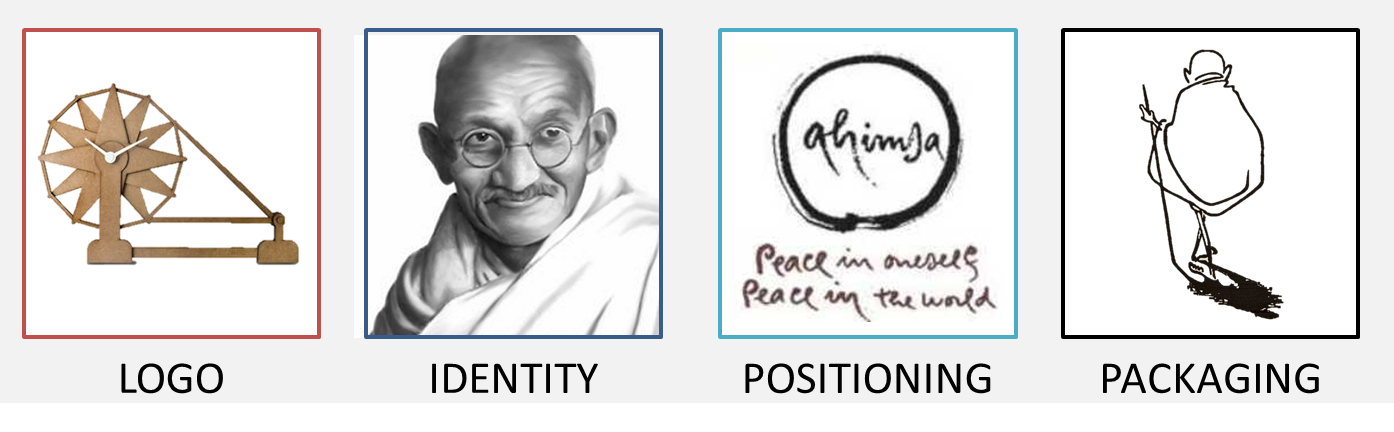
  1. Logo: He was a great creator of ‘Logos’. He made ‘Charkha’ (spinning wheel) a potent symbol of freedom fight and he devoted some part of every day to work on ‘Charkha’ to give it the required publicity. Charkha became so powerful a logo that it ended up on the National Flag till it was replaced by Ashoka Pillar.
  2. Brand Identity and Brand Ambassador: ‘Khaadi’ became the brand identity. Gandhi himself became the Brand Ambassador for Khaadi. It was not a mere rejection of Western attire– it was a response to the economic ills that beset the country. 
  3. Brand Extension: His brand recall was so strong that his name got associated with the humble khaadi cap, which he never wore! What could be a better example of brand extension?
  4. Packaging : When Gandhi came back from South Africa he promptly gave up his westernized dress and moved to dhoti, kurta, turban; and he had a ‘packaging’ which was different than other leaders of freedom fighters like Motilal Nehru, Mohammad Ali Jinnah etc. When he picked up the ‘walking stick’ he did not need one, but again it could have been a part of ‘packaging’.
  5. Slogan: While some of the best independence slogans/ punch lines written almost a century back still ignite passion among Indians e.g. Vande Mataram, Inquilab Zindabad, Tum Mujhe Khoon Do, Main Tumhe Aazaadi Doonga etc. Gandhi created a unique alternative in ‘Raghupati Raghav Rajaram’ and like Charkha, started spending time on it every day to give it enough publicity. We all are aware which is more relevant even today.
  6. Event Management:  Gandhi’s genius was evident in his staging of events and through them – to dramatize situations. He was one of the greatest event marketing man the world has ever seen. The greatest event staged by him was his Salt March to Dandi.
In sum total Gandhi could have been 'Head of Marketing' of any organization. He had full understanding of all the nuances of marketing and he implemented them to the "T". Only difference here was that he applied that knowledge for fighting for independence and social movements like struggle against untouchability.

Friday, August 8, 2014

10 Steps from Job Interview to Job Offer

Your resume is like the product that you have to sell in the market. Your job interview is usually a key determinant in whether or not you will get a job offer or not.
We have 10 simple steps which guarantee a job offer right from when you take the job interview.

1. Know the Job Description (JD) for the position applied:

It’s important to thoroughly study the job description, before you appear for the interview.  If you don't have a copy of the job description, ask for it when the interview is scheduled.
Also your hiring manager, for the names of the people who will be interviewing you. Go through their LinkedIn profiles and know about their professional background.
2. Know the answers to standard questions asked in an interview:

Apart from the standard questions, greatest strength, greatest weakness, and "where-do-you-see-yourself-in-five-years" questions, prepare for the other typical interview questions, like:
·         So what do you know about our organization?
·         What made you apply to our organization??
·         Give us 5 reasons why we should hire you?
Why did you leave your last job? (Or, why are you planning to leave?)
·         Tell us about yourself.

You should be ready with explanations if there is a gap in employment, the reason you left your last job (if you are currently unemployed), or any other career setback you might have experienced
3. Have your own questions ready.

An interview is always a two-way process/ conversation and you need information to decide if you want to work there or not.  Observe the work environment and see if it suits you.

Ask questions like:
·         Is this a new job or a replacement for someone who has left?
·         Who will I be reporting to?
·         What will I be responsible for in this organization?
·         How does this team work?  How is success determined or measured?
·         What is necessary for the person in this job to be successful? How will you determine if the person is successful?

Don't be afraid to ask for clarifications if an answer isn't clear.
4. Never badmouth former bosses

A job interview is no platform to take your frustration out, be it your previous organization, your previous boss or the previous colleagues. Never complaint!
5. Be on time; be well-prepared, dress appropriately

Leave much in advance from the time you’re scheduled for the interview. Never be late, even if you arrive earlier than the scheduled time for the interview, doesn't matter, you can wait but remember you should never let your interviewer wait for you.

Carry several copies of your resume (customized for this opportunity.

If you have enough notice for the interview, be very well-prepared. Don't stop with checking the employer's website; also scan the LinkedIn Company Profile. If you know a current or former employee and you have some time, contact them to see what you can learn about the organization, the hiring process, and the people interviewing you. Google everything you need to know about the organization, the company profile, scan the LinkedIn profiles of the CEO, the founder of the company etc.

 Do not forget to put your cell phone on silent, or turn it off when you enter the interview area. Do not answer your cell  or text anyone during an interview

6. Exchange business cards:

Collecting business cards from the people interviewing you will make it much easier to send those post-interview thank you notes. It will also help you to address people appropriately during the interview.
7. Listen carefully, speak clearly
You have already prepared answers to many of the standard job interview questions.  But, listen carefully to the questions you are asked. Know what the interviewer wants to know, not what you want to speak Answer those questions clearly, don’t hesitate.
8. Ask your Hiring/ HR Manager about the next step are in the hiring process

Ask them in detail about the hiring process and what the next steps in the process are. Find out when you should expect to hear from their contact person. 

9. Attempt to build a rapport with your interviewer:

Have a limited eye contact, have a one on one conversation (remember: an interview is not a one sided process)

9. After the Interview: Follow Up!

Do not assume that you didn't get the job! When you call, be polite; gently remind them of your name, the job you had interviewed for, the date you interviewed, and the people who interviewed you. Ask if a decision has been made. If it hasn't been made, ask them when you should expect a call.


All the Best! 

Text Widget 2