Thursday, August 21, 2014

Revenue Management: Important Tool for the Hotel Industry

Today, implementing revenue management can be one of the most important revenue generating initiatives available to a hotel, which significantly can increase room revenues and strategies.

History of the term ‘Revenue Management’
The term ‘Revenue Management’ was first introduced in the 1980’s by the airline industry. Revenue management was born out the need to fill at least a minimum number of seats without selling every seat at discount prices; the idea was to sell enough seats to cover fixed operating expenses. Once fixed expenses were covered, and there were fewer remaining seats to sell, they could then sell the remaining seats at higher rates to maximize revenue and profits.

Revenue Management entirely depends and functions on the policy of DEMAND and SUPPLY.

The
basic function which the airline industry as well as the hotel industry depend on is the basic ‘Revenue Management Formula’ which is as mentioned below:
· There is a fixed amount of resources available for sale.
· The resources to sell are very perishable.
· Customers are willing to pay a different price for using the same resources.

The ‘Revenue Management Formula’ works extremely well for the hotel industry. We must not forget that the rooms in a hotel are perishable. A room which is vacant for the night is gone forever.

Effective market segmentation is the key to successful revenue management for hotels.

Today we had Mr.Sandeep Joshi
, General Manager – Fortune Select Excalibur, Gurgaon conduct an expert lecture for students pursuing International Hotel Management at INLEAD. The agenda of the workshop was ‘Revenue Management’ which gave students a deeper perspective in the hotel industry. To start with, he introduced the following terms:

RACK RATE/ TARIFF RATE: The hotel suggested rate to the seller/ guest through the rate or display card at the rack, the intention was to help standardize price among locations. The Rack rate / tariff rate is also the flat rate of the year. While hotels always sold at the suggested rack price, others started to sell below It when hotels were empty.

DYNAMIC PRICING: Dynamic Pricing, means that a hotel will change its room rates daily or even within a day if up to the minute market info which reveals the need for adjustments. Dynamic Pricing is based on the recognition that the right rate to charge for a room a night is what the customer is willing to pay.

DEMAND BASED PRICING: A very popular pricing principle that applies on dynamic pricing is called Demand Based Pricing. The inflow demand periods, lower rates are offered. As the demand increases. Higher rates are quoted else lower rate categories are considered. 


Mr.Joshi also listed few steps under RESTAURANT REVENUE MANAGEMENT which were as mentioned below:

1) Establish the baseline
2) Understand the Drivers
3) Make recommendations
4) Implement the changes
5) Monitor outcomes

INLEADers Speak:


  1. Kashika Gopal, student of  International Hotel Management Batch: July’14 (PGDM) says, "Mr. Sandeep Joshi gave us a great insight in Revenue Management. It was an informative and knowledge oriented session. Concepts like dynamic pricing, SPARR and RevPASH which were new to the students were explained in a simple manner that helped us relate to the subject".
  2. Ashwani Kumar, student of International Hotel Management Batch: July’14 MBA (L) says, "It was an interactive and informative session.
  3. Sneh Malhotra, Student of International Business Management Batch: July’14 MBA (L) says, "It was a good and an informative session. We got to know about new scope in this field and learnt how in basic terms revenue is calculated and its application in industries across".
Students thoroughly enjoyed the session as it gave them a deeper perspective of the hotel industry and they now have a fair idea of how ‘Revenue Management’ plays an important role.

Towards the end, we can conclude by saying that, that Revenue Management is a discipline with proven track record and Revenue Management as tool is a effective means for a hotel business to run effectively.  

Wednesday, August 20, 2014

"PR is Performance Recognition" – Douglas Smith

What is meant by the term ‘Public Relations’?  
Public relation (PR) is the art and science of managing communication between the organization and the most important role it plays is to build manage and sustain its positive image.


Public Relations (PR) at INLEAD combines the key skills and public appearance. The demand for PR professionals has increased drastically over the years.  These days’ organizations are looking for well-trained public relations professionals who have the added skill set of event management expertise. Together Event Management & Public Relations go hand in hand. Potential employers while hiring will give due importance to a candidate who has in depth subject knowledge of each.
Success for a public relation professional depends largely for the reputation they create for the brand. PR professionals act as the mediator between the companies/ organizations/ people and the public/ media.

What is the minimum eligibility to work as a PR professional?
A PR professional is required to have a relevant type and level of education such as a master’s degree in Event Management and PR.  A PR specialist requires certain skills which are acquired through additional education and training. Excellent training and verbal communication skills are mandatory. A PR specialist also should know how to work under pressure, having knowing that he should know how to keep the situation calm and how to work under pressure. The client’s reputation is in their hands, they should know how well they can handle that.

Why do we need a PR?

1)    They help maintain a public image
2)    They help maintain relations
3)    They help manage crisis situations
4)    They help manage government affairs
5)    They help conduct CSR activities

Public relations have gained high importance in India today as companies have realized the importance to maintain the image which is the need of the hour. The need and necessity for maintaining public relations apart from spending funds on good advertising and marketing strategies is highly regarded and is definitely required these days.


"Some are born great, some achieve greatness, and some hire public relations officers.” - Daniel J. Boorstin. To be among those Public Relations officers pursue an MBA or a PGDM in Event Management & Public Relations from INLEAD today.

Thursday, August 14, 2014

Management Lessons from Independence Movement – Chapter 1: Marketing Skills of Mahatma Gandhi

M. K. Gandhi (1869 - 1948) never won a Nobel Prize. He never wrote a best seller. He never won a war. He never was a President. He never was a movie star. He never made it big in industry. He never even made money. Still, virtually every poll across the globe, names him as the Man of the century.
Marketing Skills of Mahatma Gandhi
So what is it that makes the frail man from Porbander, such a towering Titan? Is it his ideas? Probably not. Ahimsa and Satyagrah are age-old concepts. There have been many apostles of peace before. But none enjoyed as much adulation as this humble person. What makes this man the ultimate icon?

It may sound preposterous, but can we credit this phenomenon to his marketing skills?
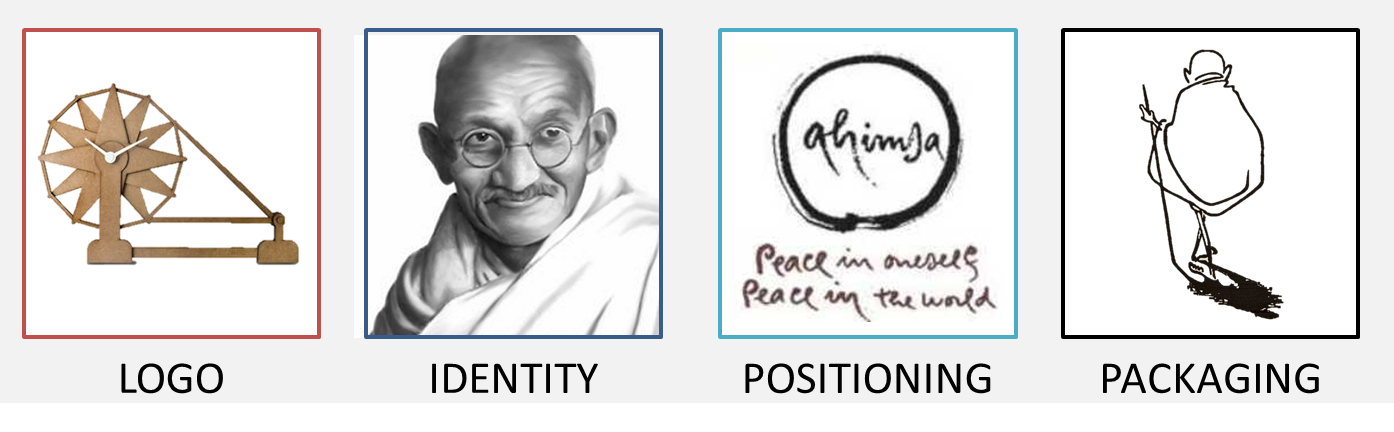
  1. Logo: He was a great creator of ‘Logos’. He made ‘Charkha’ (spinning wheel) a potent symbol of freedom fight and he devoted some part of every day to work on ‘Charkha’ to give it the required publicity. Charkha became so powerful a logo that it ended up on the National Flag till it was replaced by Ashoka Pillar.
  2. Brand Identity and Brand Ambassador: ‘Khaadi’ became the brand identity. Gandhi himself became the Brand Ambassador for Khaadi. It was not a mere rejection of Western attire– it was a response to the economic ills that beset the country. 
  3. Brand Extension: His brand recall was so strong that his name got associated with the humble khaadi cap, which he never wore! What could be a better example of brand extension?
  4. Packaging : When Gandhi came back from South Africa he promptly gave up his westernized dress and moved to dhoti, kurta, turban; and he had a ‘packaging’ which was different than other leaders of freedom fighters like Motilal Nehru, Mohammad Ali Jinnah etc. When he picked up the ‘walking stick’ he did not need one, but again it could have been a part of ‘packaging’.
  5. Slogan: While some of the best independence slogans/ punch lines written almost a century back still ignite passion among Indians e.g. Vande Mataram, Inquilab Zindabad, Tum Mujhe Khoon Do, Main Tumhe Aazaadi Doonga etc. Gandhi created a unique alternative in ‘Raghupati Raghav Rajaram’ and like Charkha, started spending time on it every day to give it enough publicity. We all are aware which is more relevant even today.
  6. Event Management:  Gandhi’s genius was evident in his staging of events and through them – to dramatize situations. He was one of the greatest event marketing man the world has ever seen. The greatest event staged by him was his Salt March to Dandi.
In sum total Gandhi could have been 'Head of Marketing' of any organization. He had full understanding of all the nuances of marketing and he implemented them to the "T". Only difference here was that he applied that knowledge for fighting for independence and social movements like struggle against untouchability.

Friday, August 8, 2014

10 Steps from Job Interview to Job Offer

Your resume is like the product that you have to sell in the market. Your job interview is usually a key determinant in whether or not you will get a job offer or not.
We have 10 simple steps which guarantee a job offer right from when you take the job interview.

1. Know the Job Description (JD) for the position applied:

It’s important to thoroughly study the job description, before you appear for the interview.  If you don't have a copy of the job description, ask for it when the interview is scheduled.
Also your hiring manager, for the names of the people who will be interviewing you. Go through their LinkedIn profiles and know about their professional background.
2. Know the answers to standard questions asked in an interview:

Apart from the standard questions, greatest strength, greatest weakness, and "where-do-you-see-yourself-in-five-years" questions, prepare for the other typical interview questions, like:
·         So what do you know about our organization?
·         What made you apply to our organization??
·         Give us 5 reasons why we should hire you?
Why did you leave your last job? (Or, why are you planning to leave?)
·         Tell us about yourself.

You should be ready with explanations if there is a gap in employment, the reason you left your last job (if you are currently unemployed), or any other career setback you might have experienced
3. Have your own questions ready.

An interview is always a two-way process/ conversation and you need information to decide if you want to work there or not.  Observe the work environment and see if it suits you.

Ask questions like:
·         Is this a new job or a replacement for someone who has left?
·         Who will I be reporting to?
·         What will I be responsible for in this organization?
·         How does this team work?  How is success determined or measured?
·         What is necessary for the person in this job to be successful? How will you determine if the person is successful?

Don't be afraid to ask for clarifications if an answer isn't clear.
4. Never badmouth former bosses

A job interview is no platform to take your frustration out, be it your previous organization, your previous boss or the previous colleagues. Never complaint!
5. Be on time; be well-prepared, dress appropriately

Leave much in advance from the time you’re scheduled for the interview. Never be late, even if you arrive earlier than the scheduled time for the interview, doesn't matter, you can wait but remember you should never let your interviewer wait for you.

Carry several copies of your resume (customized for this opportunity.

If you have enough notice for the interview, be very well-prepared. Don't stop with checking the employer's website; also scan the LinkedIn Company Profile. If you know a current or former employee and you have some time, contact them to see what you can learn about the organization, the hiring process, and the people interviewing you. Google everything you need to know about the organization, the company profile, scan the LinkedIn profiles of the CEO, the founder of the company etc.

 Do not forget to put your cell phone on silent, or turn it off when you enter the interview area. Do not answer your cell  or text anyone during an interview

6. Exchange business cards:

Collecting business cards from the people interviewing you will make it much easier to send those post-interview thank you notes. It will also help you to address people appropriately during the interview.
7. Listen carefully, speak clearly
You have already prepared answers to many of the standard job interview questions.  But, listen carefully to the questions you are asked. Know what the interviewer wants to know, not what you want to speak Answer those questions clearly, don’t hesitate.
8. Ask your Hiring/ HR Manager about the next step are in the hiring process

Ask them in detail about the hiring process and what the next steps in the process are. Find out when you should expect to hear from their contact person. 

9. Attempt to build a rapport with your interviewer:

Have a limited eye contact, have a one on one conversation (remember: an interview is not a one sided process)

9. After the Interview: Follow Up!

Do not assume that you didn't get the job! When you call, be polite; gently remind them of your name, the job you had interviewed for, the date you interviewed, and the people who interviewed you. Ask if a decision has been made. If it hasn't been made, ask them when you should expect a call.


All the Best! 

Friday, July 25, 2014

First Day of College? Tips & Tricks to Ease the Transition

While you pursue Post Graduation (PG) you will be making a lot of changes in your life, some of you might have relocated and some of you might have just taken admission knowing a PG will help you climb up the ladder in the corporate arena.
Try these some tips and tricks which will help you adjust to your new life and avoid stress.
You’re life completely changes, instead of your parents waking you up in the morning, you suddenly get into the habit of putting alarms, waking up and heading to college all by yourself. You're suddenly completely on your own, with a lot of freedom and a whole new world of opportunities to embrace. These tips can help you ease the transition into college life.

1)     
Welcome New Experiences:

A new place, a new roommate…Everything is different when you first get to college. Be open-minded, don’t be narrowing minded.  Expect new changes and situations to take place regularly and be open to meeting new people.  You may or may not enjoy the company of people but listening to their point of views is extremely important. You will get to meet people from different backgrounds etc.
     2)      Connect with Your Peers
You might be in a new place, but you're not alone. Your classmates will be meeting everyone for the first time too. Strike up a conversation with the person sitting next to you in class.  Don't stress about forming friendships right away, it will probably take some time before you find the right crowd for your personality and interests. In the meantime, enjoy meeting new people and get used to reaching out to others.
     3)      Manage Your Time
Don’t lose focus; don't forget that you have relocated from a different city for the college which will help fulfill your dreams. Review your syllabi or ask your mentor to find out the deadlines for assignments and exams in each of your courses, make a calendar or planner to keep track of those deadlines. (Maintain a time table). 
All the Best! 

Wednesday, July 23, 2014

Ms. Annie Mathen – Regional Human Resource Manager – North, Columbia Asia @ INLEAD

Yesterday, 22nd of July an expert lecture was conducted by Ms. Annie Mathen – Regional Human Resource Manager – North, Columbia Asia. The agenda of the workshop was 'Corporate Expectations & Industry Orientation'.


 She introduced herself by giving a description of how she climbed the ladder from the scratch to where she is now. ‘Make a Difference’ is what she highlighted the most in her session. She advised students to take the plunge, because in the end it’s all worth it. She also advised the students to become active on LinkedIn, the professional networking site. Reading is one habit which all the students should inculcate is what she emphasized upon. Three new words should be learnt every day and should be used in the sentences we use daily. 


Big Mean World’s Expectations/ Corporate Expectations

1) The Right Attitude
2) Excellent Communication skills
3) High Moral Values
4) Well Groomed Personality
     - extraversion
     - agreeableness
     - conscientiousness
    - emotional stability
     - openness to experience
5) Make maximum utilization of IQ (creative decision making)


Make an Impression: 5 Self Mantras

- sell yourself
- present yourself
- groom yourself
- think for yourself and be quick
- read for yourself


Leave a lasting impression” is what Ms.Annie Mathen suggested to the students before she opened the session for a question and answer round.   

Thursday, July 17, 2014

Importance of INTERNSHIPS in the Hospitality Sector

Internships in the hospitality sector are as important a part of the curriculum as theory papers.

These internships are given a considerable weight age in the final exams of the hotel management course.

The students are involved in these internships because of the nature of their course i.e. hotel management. The hotel management industry is all about treating one’s customer right and this experience can only be gained if students learn to interact properly with them.
Hospitality internships are the best way to bridge the gap between going to college and landing in a great job.

Internships can help you develop your Hospitality experience by learning from experienced professionals. At the end of your internship, you’ll have relevant experience which will help you to decide if a career in Hospitality is the right choice for you or not.

The hospitality sector comprises of various departments which include
Room Division Management, Finance, F&B, and Guest Services.

A restaurant and a hotel today require skilled people for operating and managing facilities including management, maintenance, services and human resources.

Internships in the hospitality sector today trains individuals in business operations, management and provide them the right skill set for the future.


Get Started Today! Pursue International Hotel Management from INLEAD and get a chance to interns with the top notch hotel chains across the globe.

Friday, July 11, 2014

Want your dream job? Avoid these 10 mistakes.

We bring to you 10 tips following which will help you get a ticket to your dream career.

    1)    Avoid typo errors/ spelling mistakes on your resume- You don’t get a second chance to make a first impression. Example: I am loking for a job instead of I’m looking for a job.
   
2)   
A funky email address – Example iloveher@gmail.com
     
3)  
Avoid using abbreviations- Example: Etc. in your resume
   
4)   
Don’t forget to write/ attach the cover letter/ resume along with the email you send to your employer.
   
5)   
Highlight duties instead of your accomplishments: Focus more on what you have achieved.
   
6)   
Keep your resume tidy and simple to read. Do not use highlighters or colored pens.
   
7)   
Don’t be badly/ poorly dressed for the interviews: Wear formals 
   
8)   
Avoid using your phone: Don’t check your phone on short intervals, this might show you’re less enthusiastic to get the job.
   
9)   
Move On: Feeling down about rejection: Rejection is all part of life. Move onto the next opportunity
   
10)     
Avoid using phrases like ‘I am responsible for” and instead use phrases like ‘I resolved’.


All the best!

Monday, July 7, 2014

INLEADers @ the Biggest Entertainment & Comedy Show of Kapil Sharma

Until now Kapil Sharma and his family were seen only on T.V. this time he was performing LIVE.


On 5th of July’14 students of INLEAD were a part of the event which was powered by olx at the Indira Gandhi Indoor System in New Delhi.


It was bound to be a fun ride when Kapil Sharma AKA Bittu's house was visited by RJ Raunac AKA Baua.
The role of the students of INLEAD was to look into event operations and artist management


The course in Event Management and Public Relations at INLEAD has a practical element, wherein students are taken for industry visits to various events big and small for them to get a practical exposure. In order to prepare the students for the live event scenario, it is extremely important for them to know the key principles and concepts of event management.  


The main purpose for us to send our students for such events is for them to build upon skills in the principles of event management.


Friday, July 4, 2014

Event Management: A Potentially Rewarding Career

Event Management is attracting a lot of youngsters today. Working behind the scenes is what fascinates them the most about managing an event.

The excitement in organizing a big event, earning good money and also enjoying the perks that come along is influencing all the candidates today to pursue a career in Event Management.

A career in Event Management is definitely not a bed of roses, but  requires a lot of hard work and determination. The life of an event planner is extremely hectic. Be prepared to work/ travel 24*7. There is no such thing as fixed working hours in this profession.

Nowadays there are several colleges offering courses in Event Management, for example at INLEAD we provide a PGDM and an MBA in Event Management & Public Relations.

After movies like ‘The Wedding Planner’, ‘My Best Friend’s Wedding’,  ‘Band Baaja Baarat’, ‘Monsoon Wedding’ &  ‘Bride and Prejudice’ lots of students inquired about a career in ‘Event Planning’ and later went ahead and pursued a course in Event Management from INLEAD.

Having a degree these days is extremely important; every industry is becoming extremely professional. Having a degree in the related field just adds up to your career and definitely to your resume.

During the course of study at INLEAD, you as future, aspiring event planners will be taken for various events to get hands on experience for the kind of events you will have to handle in the near future.

Most people these days are self-employed, but few of them get employed at various event management companies, or they start assisting wedding consultants, or they start working as a brand manager with an organization.

There are several types of events which take place today. Few years back a party restricted to a tablecloth and chairs and event planners were not taken seriously, but now the entire outlook has changed. No longer are kid’s birthdays celebrated as a casual get together of friends at home, these days you require planners to plan a theme based birthday party etc.  Larger events include a concert or an awards ceremony.
To know more about Event Management & Public Relations click here:
http://www.inlead.in/event-management.php


Friday, June 27, 2014

All You Need to Know About HEALTHCARE ADMINISTRATION!

What’s the first thing that comes to your mind when you think of ‘Healthcare Administrator'? Many would say, ‘Doctors’ and ‘nurses’. But unfortunately this isn’t true.

Healthcare Administration’ includes careers from people who administer the healing of people to the people who administer the industry. Doctors and nurses cannot function on their own, for their functioning we require healthcare administrators.

Like any other profession healthcare also needs quality managers to maintain a smooth functioning in an organization. They plan and supervise the delivery of services by doctors, nurses, and technicians. Healthcare administrators play an important role in keeping the community healthy.

Healthcare Administration as a profession is constantly evolving and will always be growing and will always need qualified employees.  
Role of the Healthcare Administrators:

1) Decision making which improves the efficiency of the organization
2) Coordination of activities
3) Managing relations with other healthcare provider
4) Establish the procedures and policies of the organization
Healthcare Administrators take on leadership titles such as:
1) Business Development Officer
2) Customer Relations Manager
3) Operations Excellence Manager
4) Patient Care Manager
5) Patient Care Officer
6) Floor Manager
7) Clinical Services Manager
8) Total Quality Manager 
Career Education in Healthcare Administration
Graduates can pursue a PGDM or an MBA in Healthcare Administration. The basic curriculum at INLEAD under healthcare administration covers healthcare management, healthcare industry insights, healthcare marketing and other related topics. These programs are designed to teach students leadership, financial management, economics, law, organizational behavior, quantitative analysis methods, and planning.

Skills required by an Healthcare Administrator:

1) Appropriate education qualification
2) Leadership skills
3) Business planning Skills
4) Communication skills
5) Organizational skills
6) Decision making skills
7) Business planning skills
Your success as a healthcare administrator will depend on your ability to get along with people. You will have regular contact with patients, community members, physicians, nurses, vendors, trustees, and organizational staff. Always strive to develop your skills in working with people, negotiation, and analyzing information.
Healthcare jobs are expected to increase faster than the population during that same time, as the older population increases and improved technology advances life expectancies.


To know more about Healthcare Administration click here: http://www.inlead.in/healthcare-administration.php

10 Steps on becoming a Successful INTERN!

Is it your first day of internship? Don’t be nervous, in 10 simple steps we tell you how you can make your tenure as an intern successful.
1)    Firm Handshake: A firm handshake is what really matters and that is how you can impress your fellow colleagues.

2)    You are not there to make friends: Maintain cordial relations with people around you. Office gossip is the most integral part of any conversation when you start working, but as an intern never indulge in them. Concentrate on the work which is assigned to you rather than socializing etc.

3)    Avoid the use of your phone: Respond to messages and calls only if urgent. Being on the phone unnecessarily might seem unprofessional.

4)    Pick the perfect outfit: An outfit not only adheres to the dress code, but outfits which make you feel very confident.

5)    Don’t be afraid to ask questions: Ask your reporting manager, your recruiter, your colleagues if you have any questions regarding the way things function in the organization etc. You are an intern and are new to the company; it’s absolutely OK to clear all your doubts. Don’t hesitate.

6)    Be Confident: Self-confident is the key ingredient in anything that you do. There is a thin line between a person who is successful and the other  who is striving to be one.

7)    Give your inputs: Give your ideas to simplify processes, find newer and better ways to do the assigned work.

8)    Believe in your capabilities: It is very important for you to know that how badly the company needs you as an intern. So believe in yourself and your capabilities. Don’t forget that they hired you for a reason and they saw potential in you. Do not compare yourself to anyone. Don’t indulge in office politics.

9)    Take initiative: Volunteer for those tough assignments and projects.

10)  Respect your Time: You as an intern might not be mandated to an attendance sheet etc., however make it a point to always reach office on time. To being there on time, is half the battle won.

To be an intern is probably the most exciting opportunity that any college graduate looks ahead to. 

So, go ahead and make the most of this internship!

Wednesday, June 25, 2014

10 Steps that will help you turn your INTERNSHIP into a JOB!

If you have started interning and are now wanting to convert that internship into a full time job, here are 10 simple steps if done religiously can increase your chances of getting hired.
 
     1) Yes, I can’ & ‘Yes, I will’ Attitude: Allow yourself the opportunity to show your skill set and then build trust with your co-workers. Do not refrain yourself from carrying on new projects, after all you have to become a master and earn the position in your organization. 

      2) Communicate among your team members: Always be in sync with what’s happening in your team. Discuss new projects etc. with your team mates. Following up on emails and tasks this always helps.
   
3) 
Do not be afraid to failure: ‘Failure is the key to success’ is a famous saying. As an intern, you will make mistakes; your responsibility will be to learn from them. Keep challenging yourself; do not let failure hold you back.

     4) Prioritize your work: Prepare a to-do list, under any circumstance don’t miss out on deadlines. Set your own deadline for the completion of tasks assigned to you.
       
     5) Make a mark: Make your presence felt in the organization. Smile, dress professionally and keep working hard in order to perform well.

     6)  Add value: Know the expectations your team has from you and then work towards them. Knowing what you need to deliver should be known extremely well to you. Be an over achiever, pay attention to details and exceed expectations.

7) 
Refer to mentor for advice: This mentor can help you accelerate your career. Learn as much as you can from him. Ask him as many questions as you want, he will guide you through.

      8) Keep challenging yourself: Take every task as a challenge. Accuracy and the speed at which you complete the assigned tasks are often measured.
   
9) 
Networking: Stay in touch with everyone you have worked for. Connect with them on LinkedIn.

     10) Make the best impression: It is essential for your organization and your team mates that you have what it takes.

Many employers hire interns to later hire them as full time employees based on their dedication and caliber. So, take an internship as a proving factors to the employer you are working for.


All the Best!

Text Widget 2